

Shared Gods, Different Communities
Rethinking Hellenism, Hellenismos, and Hellenic Polytheism as Analytic Categories in Pagan Studies

I want to preface that this article is geared towards scholars working in the field of Pagan Studies, but I am writing to make this topic accessible to all. In this, I challenge researchers to abandon Hellenism, Hellenismos, and Hellenic Polytheism as analytic categories – the categories a researcher creates to organize and compare things for study. By the end of the article, you will understand why a new analytic category ultimately allows researchers to understand contemporary worship of the Greek Gods with far greater clarity than they do now.
Currently, Hellenism, Hellenismos, and Hellenic Polytheism are often used as analytic categories for people who worship the Greek Gods. Methodologically, this is deeply problematic because the categories risk presuming the very thing that should remain open to investigation: that shared devotion to the Greek Gods constitutes a shared religion, tradition, or Hellenic identity.
The problem with these categories is that we begin with a shared activity and quietly transform it into a shared identity. One person worships Zeus, Athena, Apollo, Dionysos, or Hekate; another does the same. From this shared devotional activity, it is then assumed that both belong to a common religion—usually called Hellenism, Hellenismos, or “Hellenic Polytheism.”
I do not think that conclusion follows. My position is simultaneously universalist and particularist, although not in the ways those terms are usually used. I believe that worship of the Greek Gods is open to everyone regardless of ethnicity. The Gods are not ethnic property, and Greek ancestry is not a prerequisite for devotion. At the same time, I reject the idea that worshipping Greek Gods automatically makes someone Hellenic or places them within something called Hellenism.
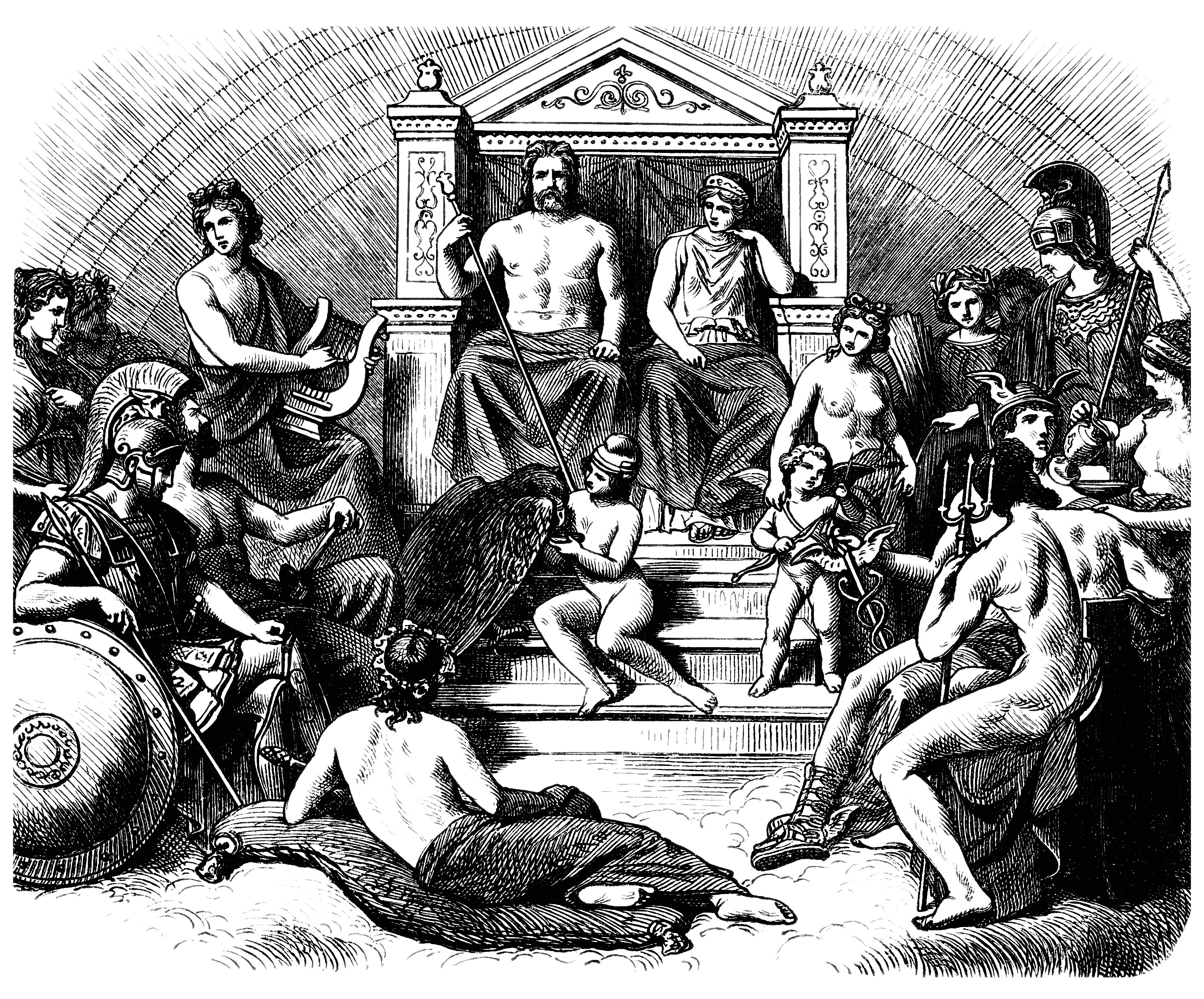
Two different questions need to be asked: Who may worship the Greek Gods? Everyone. Does worship of the Greek Gods make someone Hellenic or a participant in Hellenism simply by virtue of worship? No. Much of the confusion surrounding contemporary Greek polytheistic practice comes from collapsing these questions into one. These questions need to be asked because people can worship Greek Gods within radically different religious and philosophical frameworks.
Someone may approach Dionysos through Wicca. Another may construct a reconstructionist practice based largely on archaeological and literary evidence. Another may understand the Gods through Plato or Proclus. Another may describe themselves as Orphic. Someone else may participate in eclectic Paganism. A Greek, meanwhile, may approach the Gods through an understanding of Greek culture, language, family history, local traditions, historical memory, in addition to archaeological and textual inheritance.
All of these people may offer incense to the same God. That does not mean they belong to the same tradition. The commonality is the object of devotion. The cultural and religious meaning of that devotion may be completely different.
This is why I increasingly think that scholars studying these communities would benefit from beginning with a deliberately thin descriptive category such as “contemporary worshippers of Greek Gods.” It describes what people demonstrably share without deciding in advance what they are. The moment we instead call the population “Hellenists” or “Hellenic Polytheists,” the analytical category has already become an identity claim. That is precisely what needs to remain open for investigation.
At the heart of my disagreement is the meaning of Hellenism. I do not understand Hellenism as the name of a religion. Hellene, Hellenic, Hellenismos/Hellenism belong to an ethnocultural vocabulary associated with Greeks: a people, language, history, cultural memory, literature, philosophy, customs, artistic traditions, religious histories, and a continuing collective identity.
Religion exists within Hellenism. It does not exhaust Hellenism. This should become obvious if we consider contemporary Greeks. A Greek can be Orthodox Christian and remain Greek. A Greek can be atheist and remain Greek. A Greek can be agnostic and remain Greek. If Hellenism survives all of those religious differences, then Hellenism cannot simply mean “the religion of people who worship Greek Gods.”
The reverse is equally important. Someone does not become Greek simply because they worship Apollo. That person may be deeply devoted. They may know Ancient Greek. They may have spent decades studying Greek religion. They may understand an ancient cult better than most people born in Greece. None of that diminishes the sincerity or quality of their religious practice. But devotion, expertise, and ethnocultural belonging are different things.
This distinction matters because discussions of cultural ownership can easily slide into another mistake: the idea that ethnic Greeks possess some automatic or innate knowledge of ancient Greece. They do not. A scholar in the United States may know considerably more about ancient Greek sacrifice, Orphic fragments, Attic festivals, or Platonic theology than the average Greek.
Historical knowledge comes from evidence, scholarship, linguistic competence, training, and study. Ethnicity does not magically produce expertise. But the inverse mistake is equally problematic: assuming that scholarly expertise erases the special relationship between Greek heritage and living Greeks.
A scholar may become the world’s leading expert on an ancient Greek inscription without becoming Greek. Those are different forms of relationship. This is why I distinguish epistemic authority from ethnocultural standing. Epistemic authority answers the question: Who knows what they are talking about? Ethnocultural standing asks something different: Who belongs to the living community whose identity, language, and heritage are being discussed? The two can overlap, but neither automatically produces the other.
The concept I find useful here is living ethnocultural provenance. Ancient Greek religion did not emerge in an abstract religious marketplace. Greek Gods, myths, cults, philosophical traditions, festivals, ritual terminology, and religious institutions developed inside historical Greek communities. That alone would establish cultural provenance. But another fact complicates contemporary reception: the Greek people did not disappear.
Greek culture underwent enormous transformations. Religious institutions changed. Political systems collapsed and re-emerged. Christianity became dominant. Language evolve. Customs evolve. The previous layers still remain visible, though - linking to older versions in a historical chain.
Continuity does not mean stasis. But Greeks continued to exist as a historical people with language, collective memory, cultural transmission, relationships to particular landscapes, and consciousness of a Greek past. Ancient Greek cultural material therefore cannot be treated exactly like the religious archive of a vanished civilization with no surviving ethnocultural descendants. It remains connected (however complicatedly) to a living people.
This does not mean that Greeks possess exclusive rights to ancient Greek material. It means that the circulation of cultural material does not make that material culturally originless.
Greek philosophy can become universal. Greek texts can be translated into every language on earth. The Gods can be worshipped anywhere. None of this dissolves the historical relationship between Greek heritage and Greeks.
This brings us to appropriation. I do not believe that a non-Greek worshipping Apollo is inherently appropriative. Nor is studying Greek religion. Nor is learning Greek. Nor is practicing a reconstructed ritual. Nor is becoming deeply influenced by Plato, Proclus, Homer, or the Orphic Hymns. The problem begins elsewhere. It begins when participation in Greek cultural material becomes a basis for redefining Greek ethnocultural terminology. There is an important difference between saying: “I worship Athena” and saying “Hellenism is my religion, therefore Hellenic is my religious identity.” The first describes a devotional relationship. The second transforms terminology associated with a living people into the terminology of a modern religion.
That transformation deserves scrutiny. My objection is therefore not to participation, but to the assumption that participation automatically produces identity. Religious adoption does not automatically confer ethnocultural belonging.
Orphism provides a useful contrast in this conversation. I do not have the same objection to a non-Greek saying, “I am Orphic” or “I practice Orphism.” Why? Because Orphic does not function as an ethnonym. It identifies a relationship to Orpheus and to religious, theological, philosophical, and ritual material associated with him.
Of course, ancient Orphic material is Greek in provenance. And ancient “Orphism” itself was not necessarily a single unified, institutionally bounded religion. What scholars place under that label is diverse and historically complicated. But none of that changes the basic distinction. A contemporary person can orient their religious practice around Orphic texts and ideas without claiming Greek ethnicity.
The same is true of terms such as Platonic, Stoic, or Dionysian. These terms can identify philosophical or religious orientations. This produces a useful distinction: Orphic identifies a relationship to a body of religious authority. Hellenic identifies a relationship to a people and culture. The first can be adopted confessionally without necessarily making a claim upon the second.
Orphism therefore demonstrates that my argument is not that Greek-derived religious traditions must be restricted to Greeks. Quite the opposite. Greek-derived religious traditions can travel. What should not automatically travel with them is an ethnocultural identity.
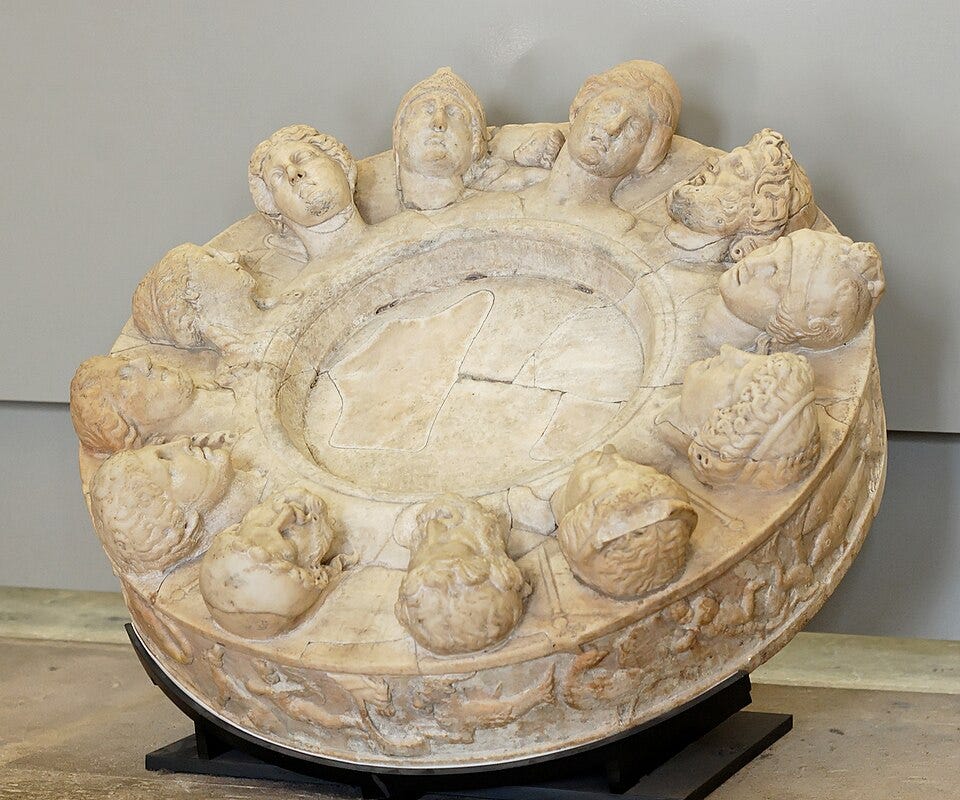
This is perhaps the simplest expression of my position: The Gods can be universal without Hellenism becoming a universal religious identity. These propositions are not contradictory. The universality of Athena does not depend upon everyone who worships her becoming Hellenic.
Apollo does not require an ethnic passport before accepting an offering. And acknowledging the Greek provenance of Apollo’s historical cults does not require restricting Apollo to Greeks. This is where contemporary conversations often become unnecessarily polarized. One side fears that acknowledging Greek cultural provenance means saying that outsiders cannot worship Greek Gods. The other fears that universal access to the Gods requires stripping Greek cultural material of any special relationship to Greeks. Neither follows. We can simultaneously affirm: universal devotional access and a particular cultural provenance exist.
This distinction has implications for scholarship. Researchers understandably need categories. Comparison becomes difficult without them. But the category should not determine the conclusion in advance. Instead of assuming a population called “Hellenic Polytheists,” I would begin with contemporary worshippers of Greek Gods and then examine several independent dimensions.
One concerns religious framework: Orphic, Platonic, Wiccan, reconstructionist, eclectic Pagan, individually developed, or something else. Another concerns self-identification: what does the practitioner actually call themselves, and which terms do they explicitly reject? Another concerns ethnocultural relationship: is the person Greek in Greece, part of a Greek diaspora community, are they significantly embedded within Greek language and cultural life, or primarily connected to Greek material through religion, philosophy, scholarship, or texts? Another concerns authority: ancient texts, modern scholarship, teachers, philosophical traditions, personal religious experiences, community practice, family transmission, or some combination. There are also different claims of continuity: reconstruction, revival, philosophical continuity, living tradition, ethnocultural continuity, or no continuity claim at all. Finally, practitioners may hold very different attitudes toward appropriation and terminology.
These dimensions do not necessarily correlate. Someone might be non-Greek, Orphic, deeply knowledgeable, universalist regarding worship, reconstructionist regarding ritual, and extremely careful about Greek ethnocultural terminology. Another person might be Greek diaspora, philosophically Platonic, culturally continuity-oriented, universalist regarding access to the Gods, and protective of the word Hellenic. Both may worship the same Gods. But those acts of worship may mean very different things. That difference should be studied rather than flattened.
The broader methodological principle is simple: Begin with activity before assigning identity. If researchers want to compare people who worship Greek Gods, then worship provides the common field. Everything else should remain an empirical question. What does the practitioner think they are doing? What tradition, if any, do they believe they belong to? What relationship do they perceive between their religious practice and Greek culture? What authority do they recognize? How does ethnicity matter—or not matter—to them? What terminology do they use? What terminology do they reject? Those are far more interesting questions than deciding beforehand that everyone belongs to a religion called Hellenism or Hellenic Polytheism.
The analytic category should be broad enough to permit comparison, but thin enough that it does not create an identity that some of the people being studied explicitly reject. Shared devotion deserves to be studied. But shared Gods do not necessarily mean shared identity, shared ethnicity, or even a shared tradition. And recognizing that distinction may ultimately allow us to understand contemporary worship of the Greek Gods with far greater clarity.
Shared devotion to the same object collapsing into an assumed shared tradition is the same move that happens whenever people notice convergence, several traditions reaching toward similar figures, and jump straight to inferring a single underlying religion or lineage connecting them, when the honest position is that the object being shared doesn't determine what the sharing actually means to each person doing it.